Explore
Try one small change.
Choose ground contact, a shift or a turn. Follow a short exploration, then return to the same starting task.
Find your starting pointThe Inyo experience
One small exploration. A clearer way to describe what you feel. Something to return to.
Try an explorationNo special equipment. No anatomy knowledge needed.
A preview of your comparison
Your starting point
Your return
Your own words. The same, different, or not sure.
One connected experience
Explore
Choose ground contact, a shift or a turn. Follow a short exploration, then return to the same starting task.
Find your starting pointLearn
Meet the structure of the foot and explore movement ideas. Open the science when you want to go deeper.
Explore the learning spaceNotes
Keep your starting and return answers together, with footwear, surface and anything else you noticed.
Open your notesKeep the same starting task for your return. That gives your comparison something specific to describe.
Find your starting point.
Explore one small change.
Repeat where you began.
Keep what you noticed.
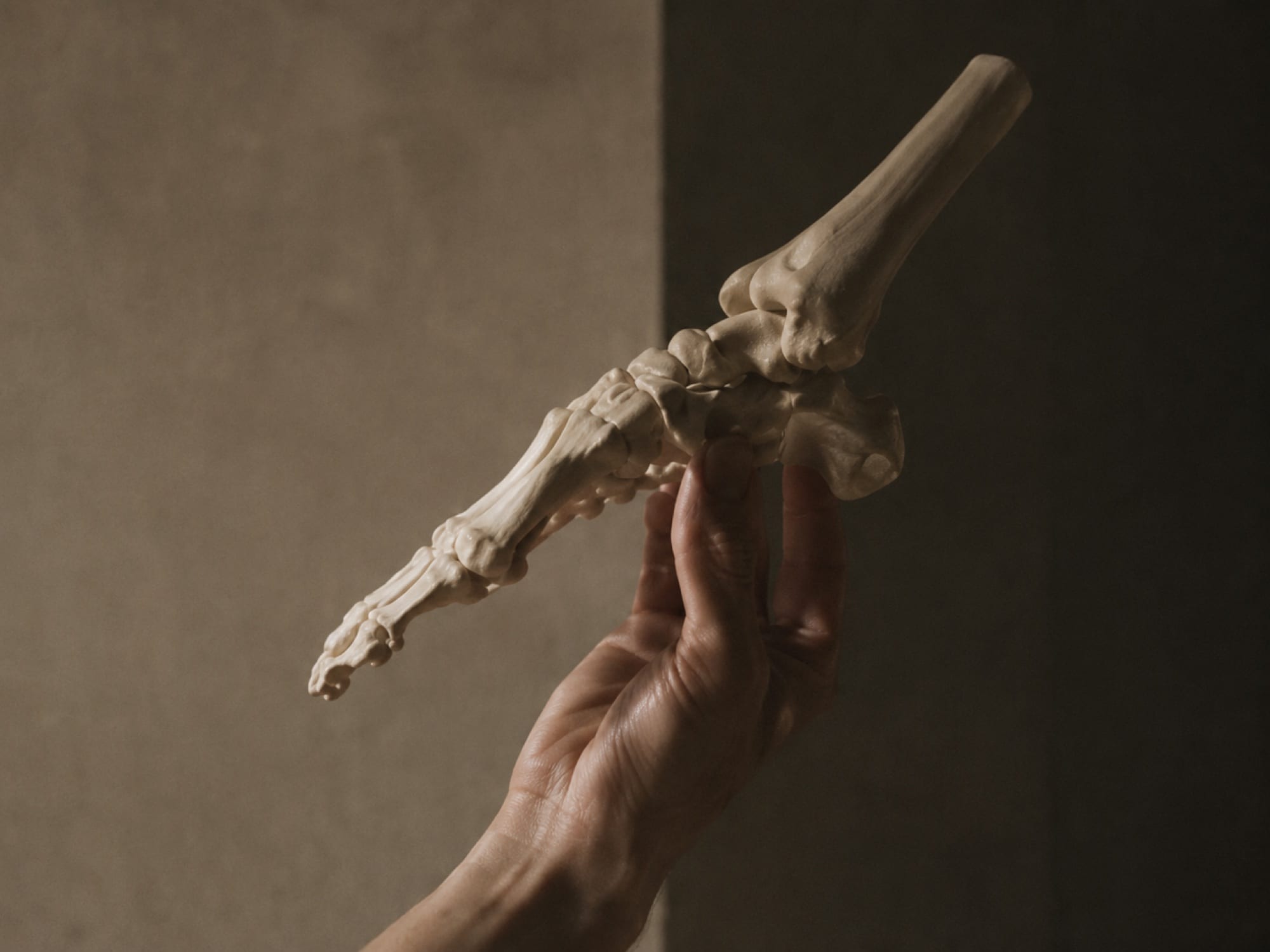 Anatomical model
Learn through looking
Explore the heel, midfoot and forefoot. See how body mass and ground pressure are different ideas. Bring that understanding back to your own experience.
Open LearnA few things to know
Ground contact is a simple starting point. You can also explore a shift or a turn. Choose what feels comfortable, and pause or stop whenever you want.
You can begin the guest experience without an account or a Mule purchase. Your records stay in this browser.
Your starting answer, return answer and chosen context form a comparison in Notes. Clearing browser data removes those records; they do not automatically appear on another device.
“The same” and “not sure” are useful answers. A changed answer is not proof of improvement, and you do not need one to complete an exploration.
Inyo draws on movement science and Gary Ward’s Anatomy in Motion framework. The app distinguishes established concepts from framework interpretations and ideas still being explored.
This experience records your own observations. It does not measure your balance, assign an archetype, or diagnose how you move. Gary’s archetype assessment is still being refined.